IV Therapy for Outdoor and Athletic Recovery

Camelback in the sun, 18 holes in triple digits or a long day on the lake. A registered nurse can bring fluids and electrolytes to your door.

Registered Nurses only. Operating in the Phoenix metro since 2016.
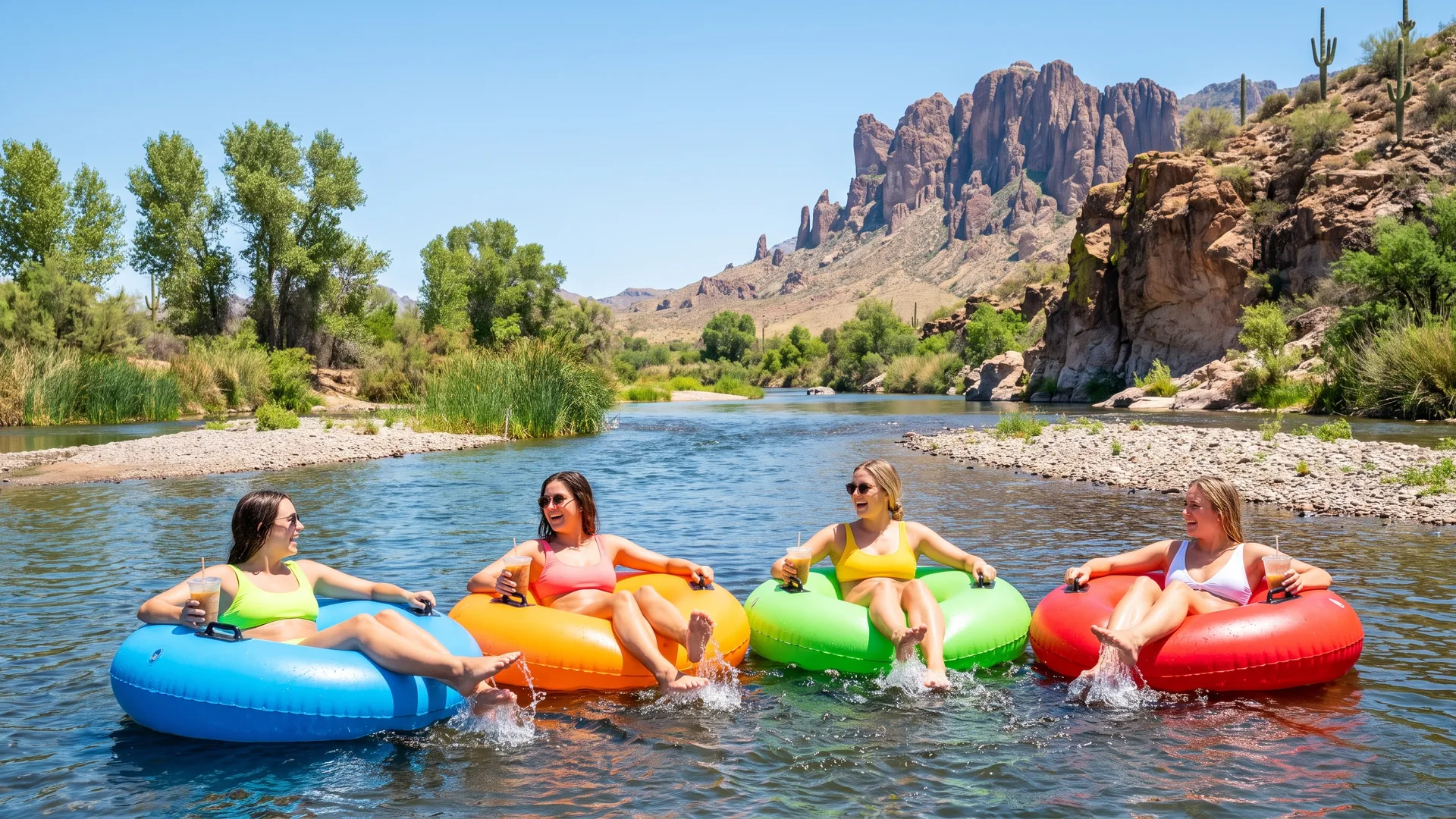
Four friends floating on inner tubes down the Salt River near Mesa, red desert cliffs behind them

Outdoor and athletic recovery is what your body has to do after prolonged exertion, especially in Arizona heat. During a long hike, tournament, race or lake day you lose water, sodium, potassium and magnesium through sweat, you burn through B vitamins running your energy pathways, and you accumulate metabolic byproducts in your muscles. A sports drink and a slice of pizza feel like a fix, but the sugar and sodium ratio is nowhere near what your body actually pulled out of you. Real recovery means putting the right fluid, the right electrolytes and the right cofactors back in.

IV therapy addresses this at the source. A balanced crystalloid like Lactated Ringers rehydrates you at the vascular level directly, rather than depending on the gut to sip and absorb. Electrolytes, B vitamins and magnesium go directly into circulation, so the muscles that are cramping and the brain that is aching get what they need without waiting on a stomach that may already feel off.
$175
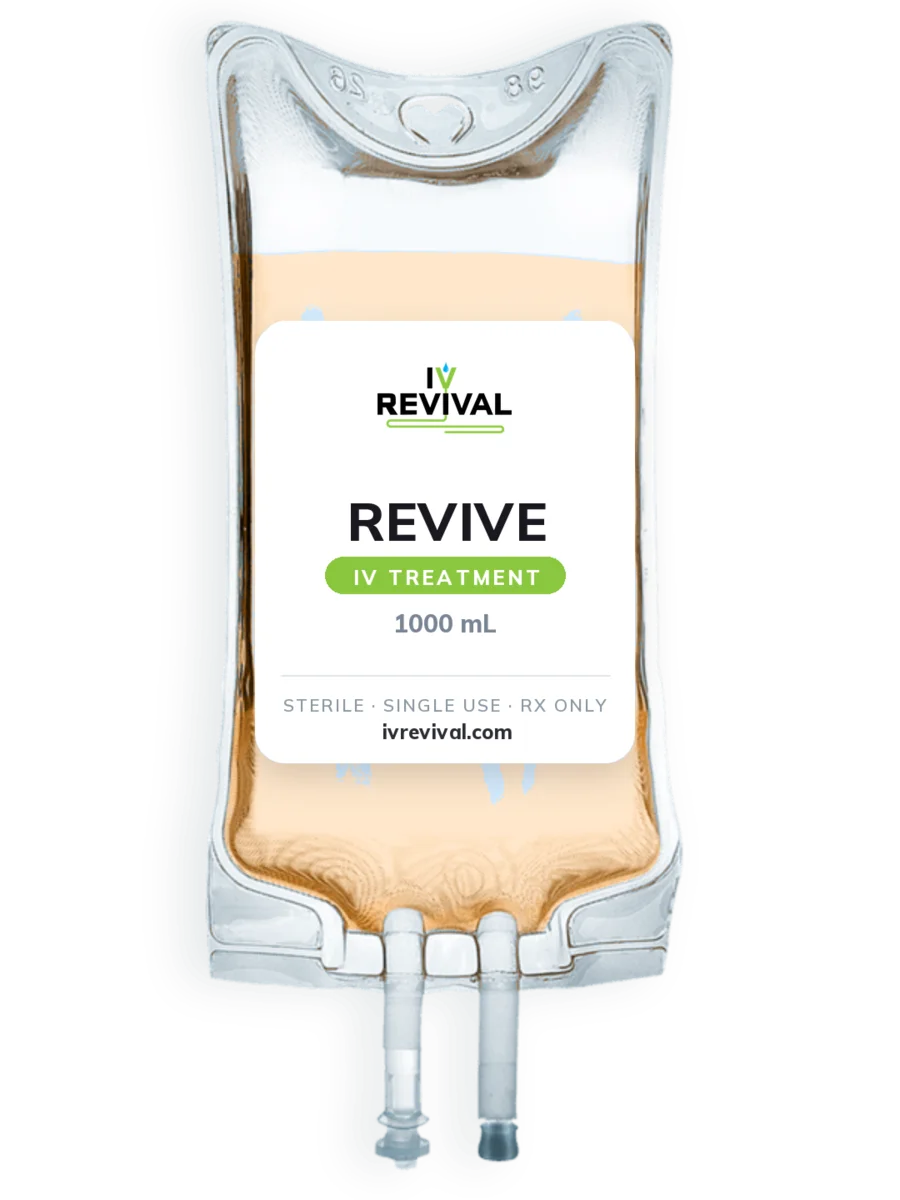
Revive IV, recommended for recovery
30 to 60 min
for most drips, at home
9 AM to 9 PM
seven days a week
Since 2016
Registered Nurses only
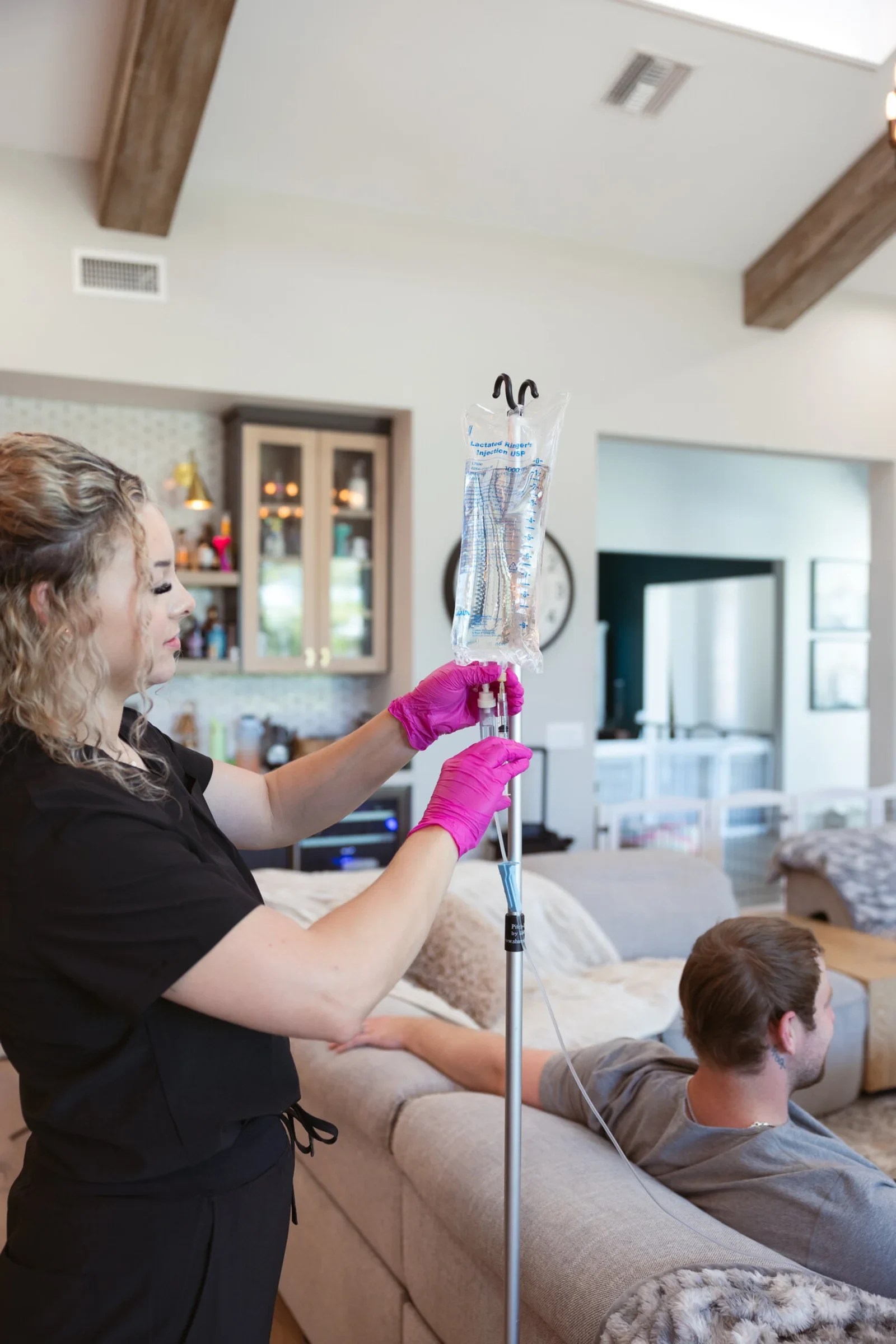
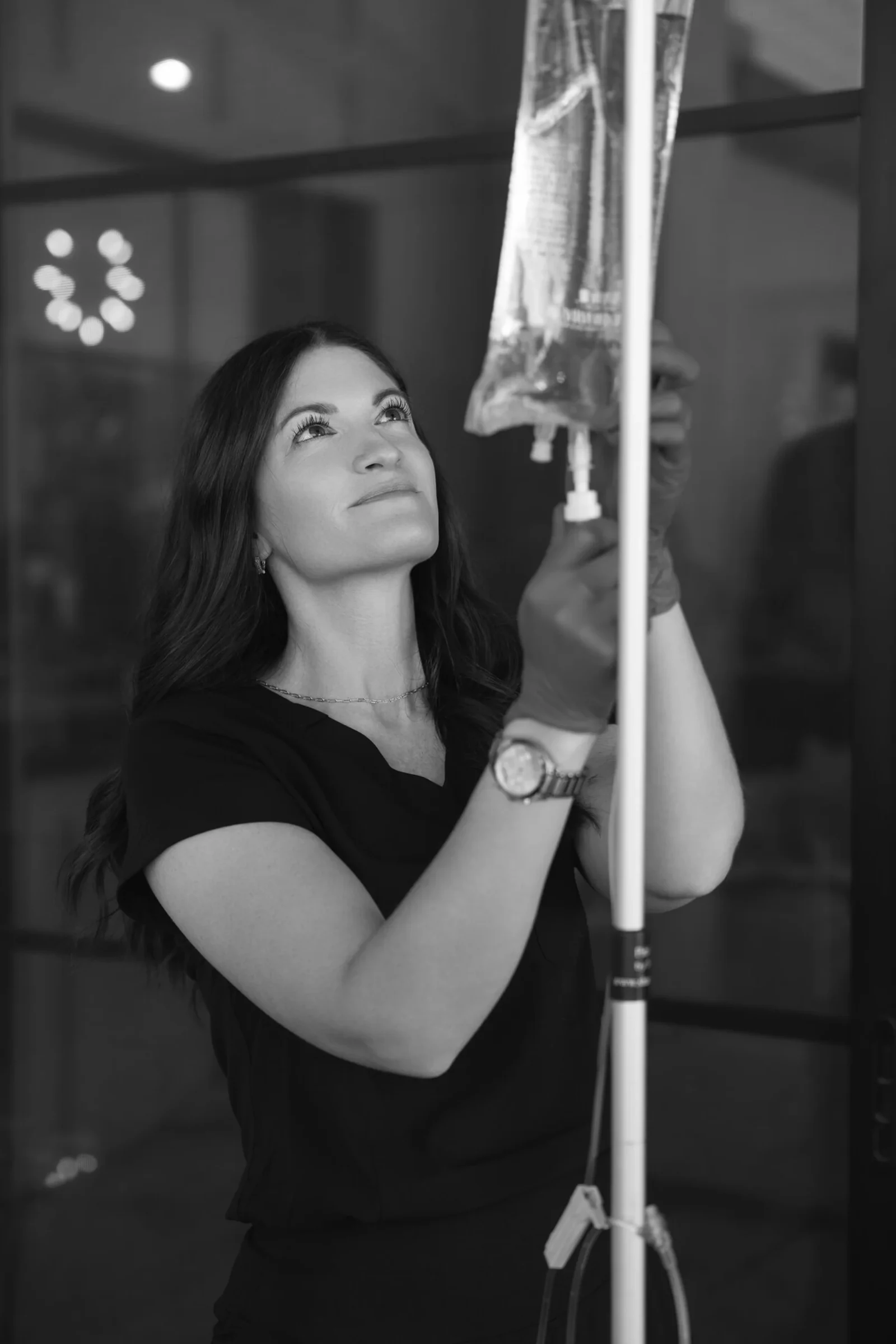
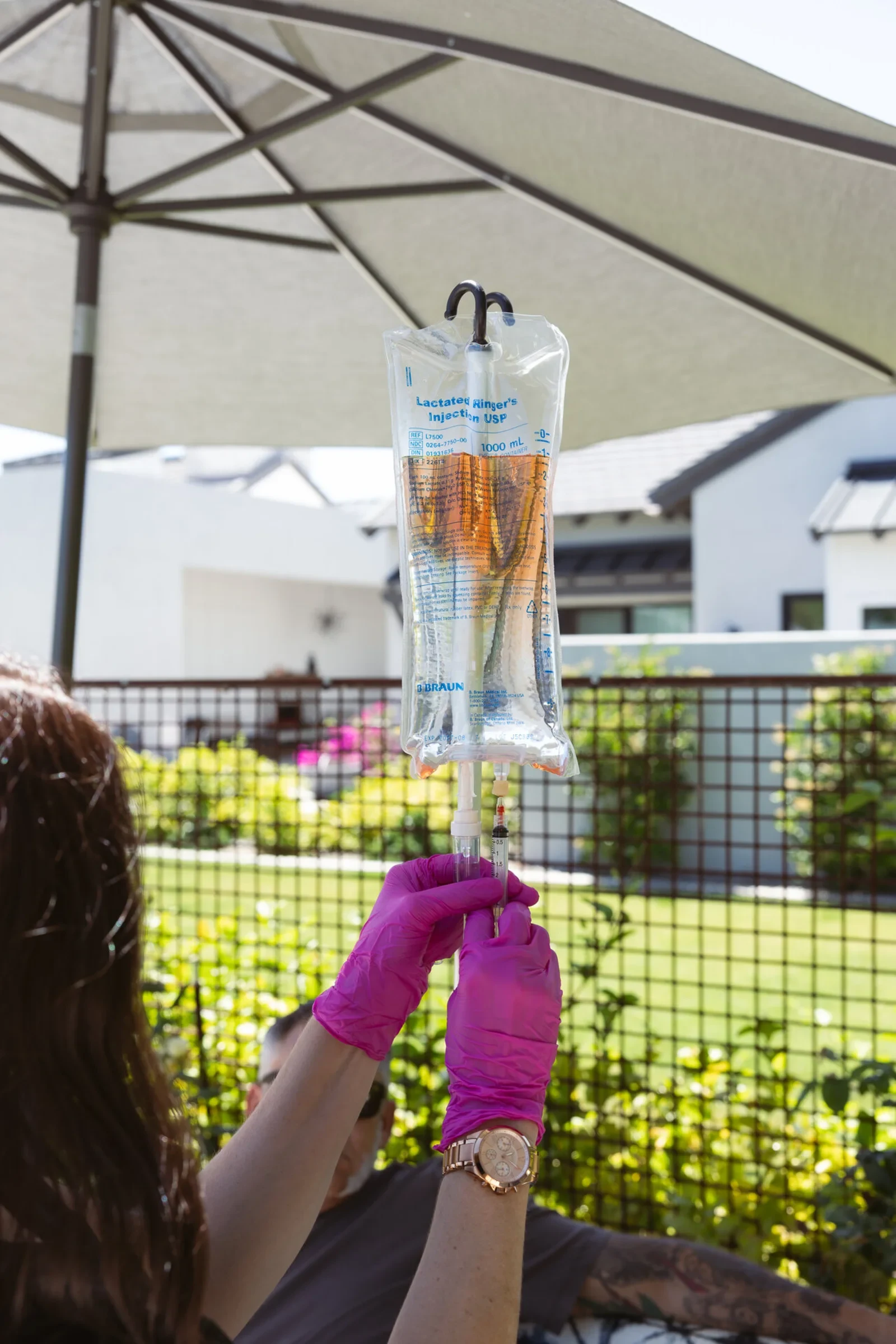
A nurse in pink gloves adjusting a hanging IV bag under a patio umbrella on a bright Phoenix afternoon

What Actually Causes Post-Exertion Fatigue and Cramping?

Recovery struggles after a hard outdoor effort are almost never one thing. They are the sum of fluid loss, mineral loss, energy depletion, heat stress and muscle micro-damage stacking on top of each other.

Fluid Loss and Plasma Volume Drop

During heavy exertion in the heat, sweat rates can exceed one to two liters per hour.

Read moreShow less

As you lose water, your plasma volume falls, blood becomes more viscous and your heart has to work harder to move oxygen. That is the heavy, sluggish feeling you get walking off the trail or the course. Oral rehydration helps, but absorption through the gut is slow and often stalls when you are already nauseous.

Electrolyte Depletion

Sweat carries sodium, chloride, potassium and magnesium out of the body.

Read moreShow less

When these fall, the electrical signals that tell muscles to contract and relax get noisy. That is when calves seize up on the drive home, hamstrings twitch overnight and the small muscles in your hands cramp. Magnesium in particular is central to smooth muscle relaxation, and its loss shows up as cramping, restlessness and a tension headache.

Glycogen and B Vitamin Depletion

Your muscles and liver store carbohydrates as glycogen, and the B vitamin family, especially B1, B2, B3, B5, B6 and B12, are cofactors that convert those carbohydrates into usable energy.

Read moreShow less

After a long effort, both the fuel and the cofactors are drawn down. This is why exhaustion can linger for a day or two after the actual event.

Heat Stress and Vasodilation

To cool you, blood vessels near the skin dilate and send warm blood to the surface.

Read moreShow less

That pulls circulating volume away from working muscles and the brain. Combined with dehydration, this is the mechanism behind the light-headedness, the flushed feeling and the mild headache that follows a hot round or a hot hike.

Muscle Micro-Damage and Inflammation

Eccentric loading, running downhill off Piestewa, hiking down Camelback, the back nine on tired legs, creates small tears in muscle fibers.

Read moreShow less

Your immune system releases cytokines to begin repair, and those inflammatory signals produce soreness, stiffness and general fatigue for 24 to 72 hours. Adequate hydration, antioxidants like glutathione and vitamin C, and micronutrient support all shorten that window.

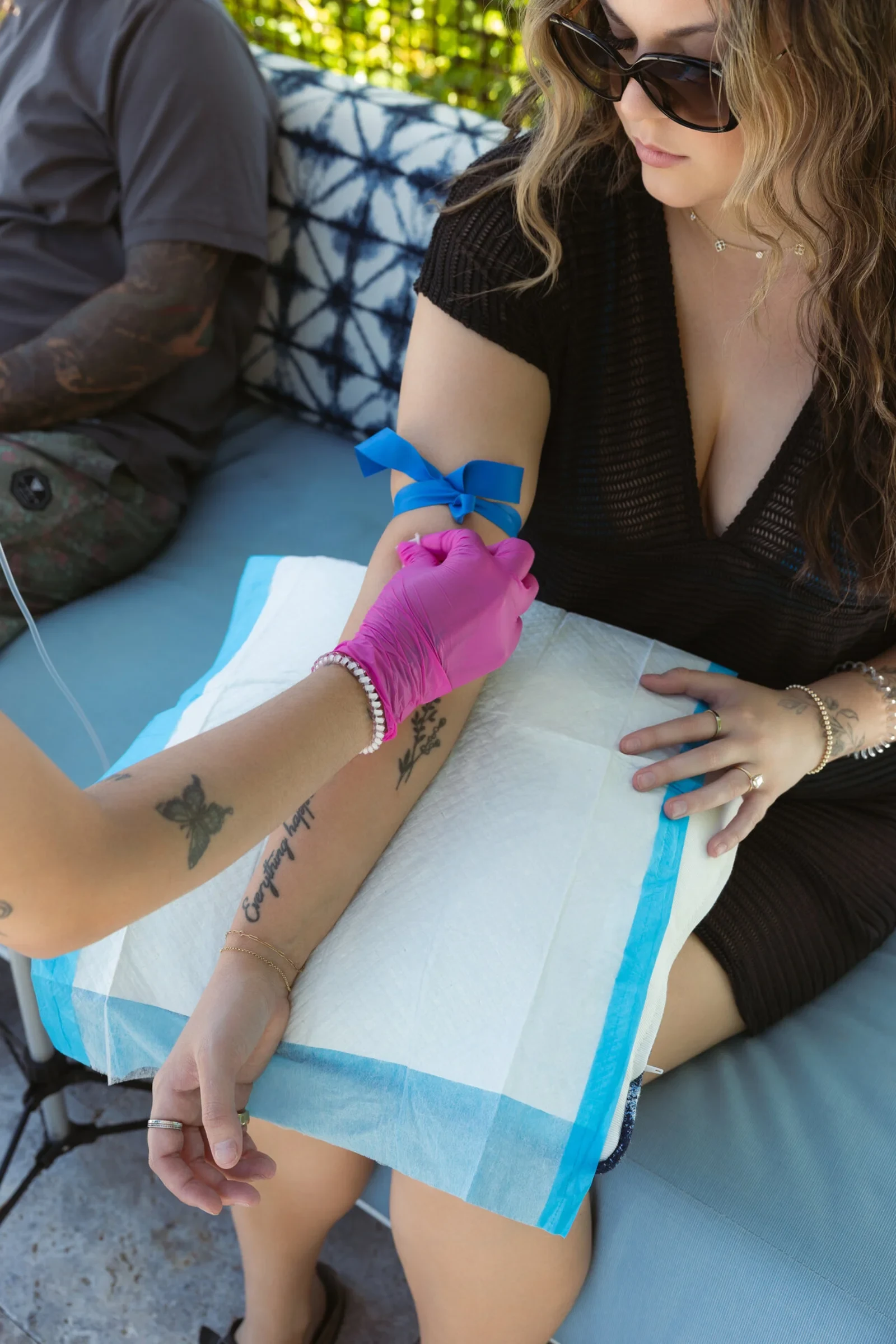
A woman in sunglasses resting on a patio daybed, her forearm dressed and the line taped in place partway through a treatment

Common Post-Exertion Recovery Symptoms

Recovery symptoms can show up after a hard effort and vary from person to person.

  • Heavy, sluggish legs
  • Muscle cramps in calves, quads or hamstrings
  • Deep fatigue and low energy
  • Dull or throbbing headache
  • Dry mouth and dark urine
  • Light-headedness when standing
  • Nausea or loss of appetite
  • Poor sleep despite exhaustion
  • Elevated resting heart rate
  • Stiff, sore muscles

When to seek emergency care: confusion, fainting, chest pain, no urine output for 8 or more hours, a core temperature above 103F, or muscle pain with dark cola-colored urine. These require immediate medical attention, not IV therapy.

How IV Therapy Fits Into Post-Exertion Recovery

A recovery drip targets the specific losses of a long effort in the heat at the same time. Fluids, electrolytes and cofactors go directly into the bloodstream, so you are not waiting on a stomach that may already be off.

IV Fluids (Lactated Ringers).

IV Fluids (Lactated Ringers).

A balanced crystalloid that restores plasma volume and includes sodium, potassium, calcium and lactate. For a dehydrated athlete, this helps bring circulating volume, blood pressure and clarity back toward baseline.

Nausea Support.

Nausea Support.

If your stomach shut down during the effort and you cannot keep water or food down, an anti-nausea add-on settles the gut so the rest of the drip and your next meal actually stay in.

B Complex Vitamins.

B Complex Vitamins.

The full B family drives the enzymatic pathways that turn carbohydrates and fats back into cellular energy. Replacing them helps lift the day-after flatness that lingers after a big event.

Vitamin B12.

Vitamin B12.

B12 supports red blood cell formation and nervous system recovery. Given IV, it bypasses gut absorption entirely and reaches tissue directly, useful when you have another training day or event coming up.

Magnesium.

Magnesium.

Magnesium relaxes smooth and skeletal muscle, calms twitchy calves and hamstrings, and often takes the edge off a post-exertion tension headache in the same session.

Recovery Options Compared: What Actually Works?

Most athletes reach for the same four things after a hard day outside. Each does something, none does everything.

OptionReplaces lost fluidReplaces electrolytesSkips the gut
Water
Why

Water rehydrates, but without electrolytes it can actually dilute the sodium you have left and make cramping worse. It also has to travel through your gut, which slows delivery when you need it most.

✓✕✕
Sports Drinks
Why

Commercial sports drinks provide some sodium and sugar but tend to be under-dosed on electrolytes for the volume of sweat lost in Arizona heat, and over-dosed on sugar. Helpful during the event, less useful for real recovery afterwards.

SomeUnder-dosed✕
Over-the-Counter Pain Relievers
Why

NSAIDs mute soreness and headache, but taking them while dehydrated puts additional load on the kidneys. They mask a symptom rather than restoring what your body actually lost.

✕✕✕
A Big Meal and Sleep
Why

Food and rest matter, but if you are already nauseous or your gut is shut down from the heat, absorption is slow and interrupted. A drip restores volume and electrolytes first, so the meal and the sleep actually work.

––✕
An IV drip at home✓✓✓

IV therapy is the most direct way to replace what a long day outside took out of you, in one session, at your home or hotel.

When Should You Get IV Therapy for Recovery?

Recovery drips are most useful in the hours after a hard effort, or the morning after when the deficit has caught up with you.

Four friends walking a sandy desert trail toward the camera in San Tan Mountain Regional Park near San Tan Valley, iced drinks in hand, saguaro cactus and the rounded San Tan Mountain ridge behind the

After a long hike

Within a few hours of finishing a long hike on Camelback, Piestewa or the McDowells.

A woman in sunglasses stretched out on a patio daybed on a warm afternoon, partway through her treatment

After a golf tournament

After a golf tournament or 36 hole day in Scottsdale, Paradise Valley or Gilbert.

Friends walking the path beside Tempe Town Lake, kayakers on the water and the Mill Avenue bridge behind them

After a race or a long ride

The evening after a race, ride or long training session in Tempe, Chandler or Ahwatukee.

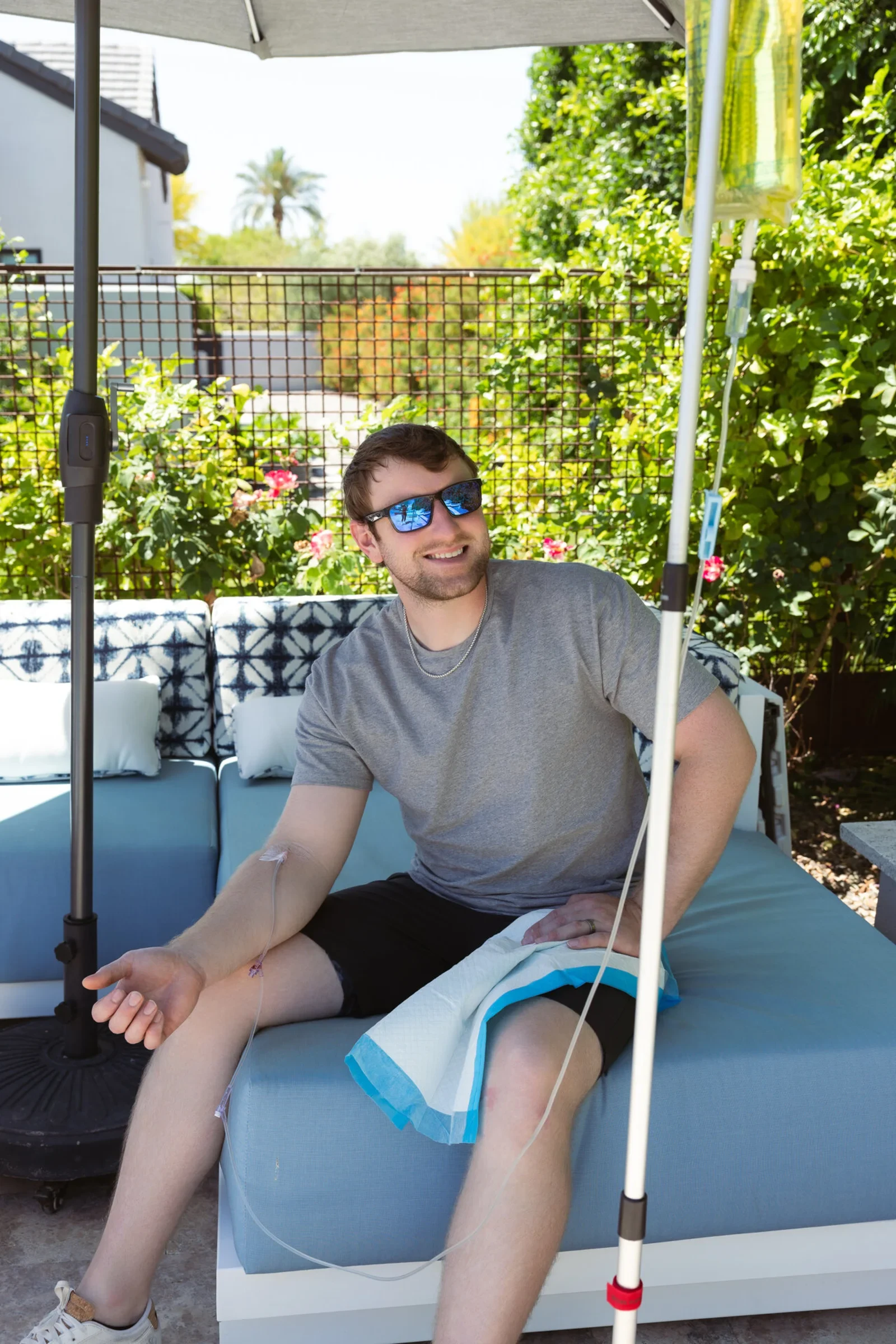
A man in sunglasses on a shaded patio daybed in Phoenix, receiving an IV with the stand beside him

Between sessions

Between sessions of a two-a-day or a multi-day event.

Four friends laughing together with iced drinks on the rocky shore of Lake Pleasant near Peoria, blue water and saguaro-covered desert hills behind them

After a day on the water

After a full day on the lake or the river when you know you did not drink enough.

Four friends walking a desert path below the red buttes of Papago Park in Phoenix, the downtown skyline in the distance

Phoenix Heat Changes the Recovery Math

Recovering from a hard effort in Phoenix is not the same as recovering from one in a mild climate. Ambient temperatures on Camelback, Piestewa, South Mountain and the McDowells can push sweat rates well past what any bottle of water on your hip belt can replace. By the time you get back to the trailhead you may already be a liter or more in the red, and the drive home only widens the gap.

Golfers in Scottsdale, Paradise Valley, Fountain Hills and Gilbert see the same pattern across 18 or 36 holes. So do cyclists coming off long rides in Ahwatukee, runners finishing races in Tempe and Chandler, and anyone spending a day on the lake near Mesa or out past Peoria. The desert air pulls fluid off you faster than you notice because sweat evaporates before it beads.

That is why an IV at home a few hours after the event tends to be more effective here than it would be at sea level. You are not topping off, you are actually catching up.

IV Revival serves the entire Phoenix metro including Phoenix, Scottsdale, Gilbert, Mesa, Chandler, Tempe, Glendale, Paradise Valley, Fountain Hills, Peoria, Ahwatukee and Avondale, with no travel fee inside a 40 mile radius.

Call (480) 848-1678 to book a nurse to your home, hotel or short-term rental in the Phoenix metro.Book Now
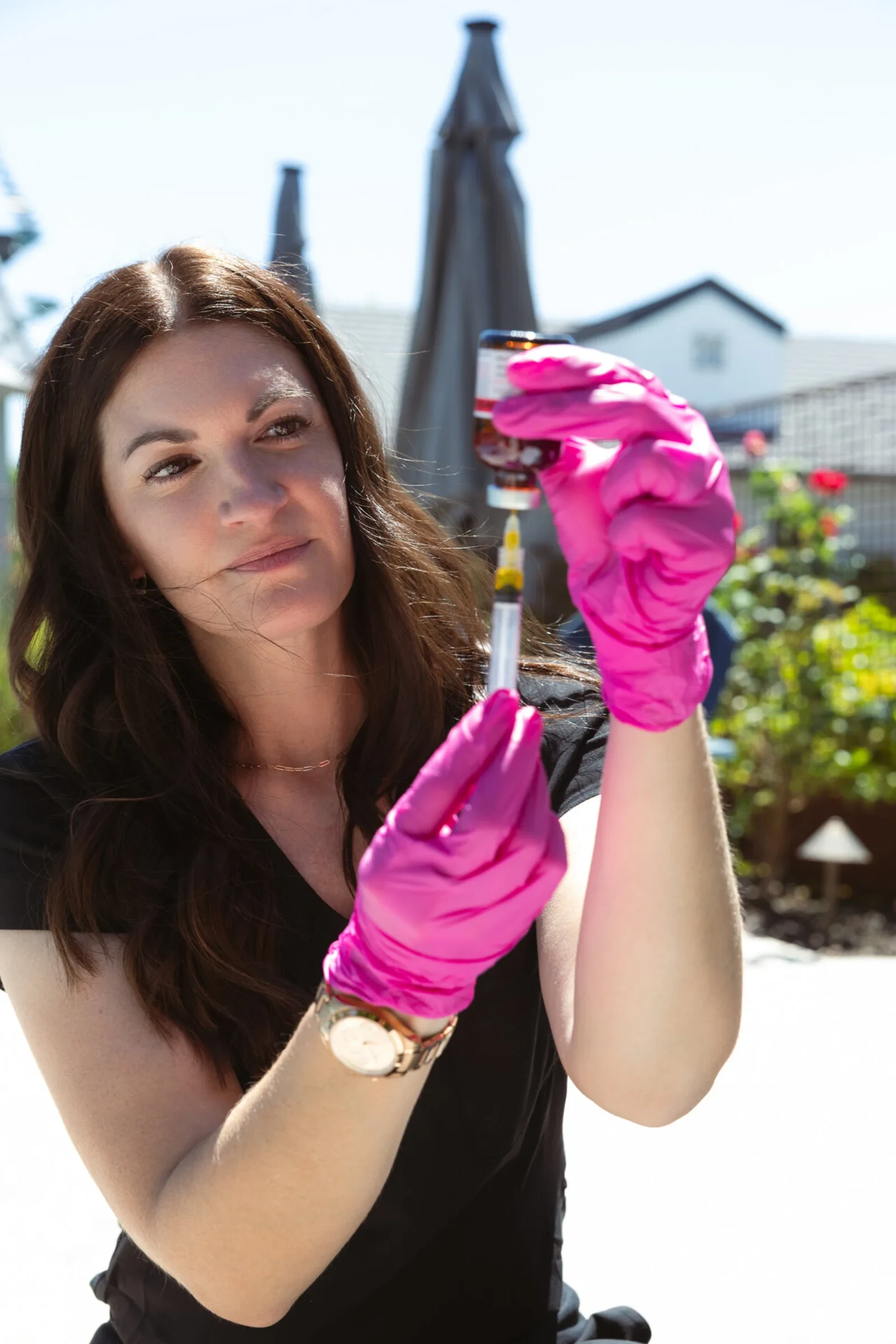
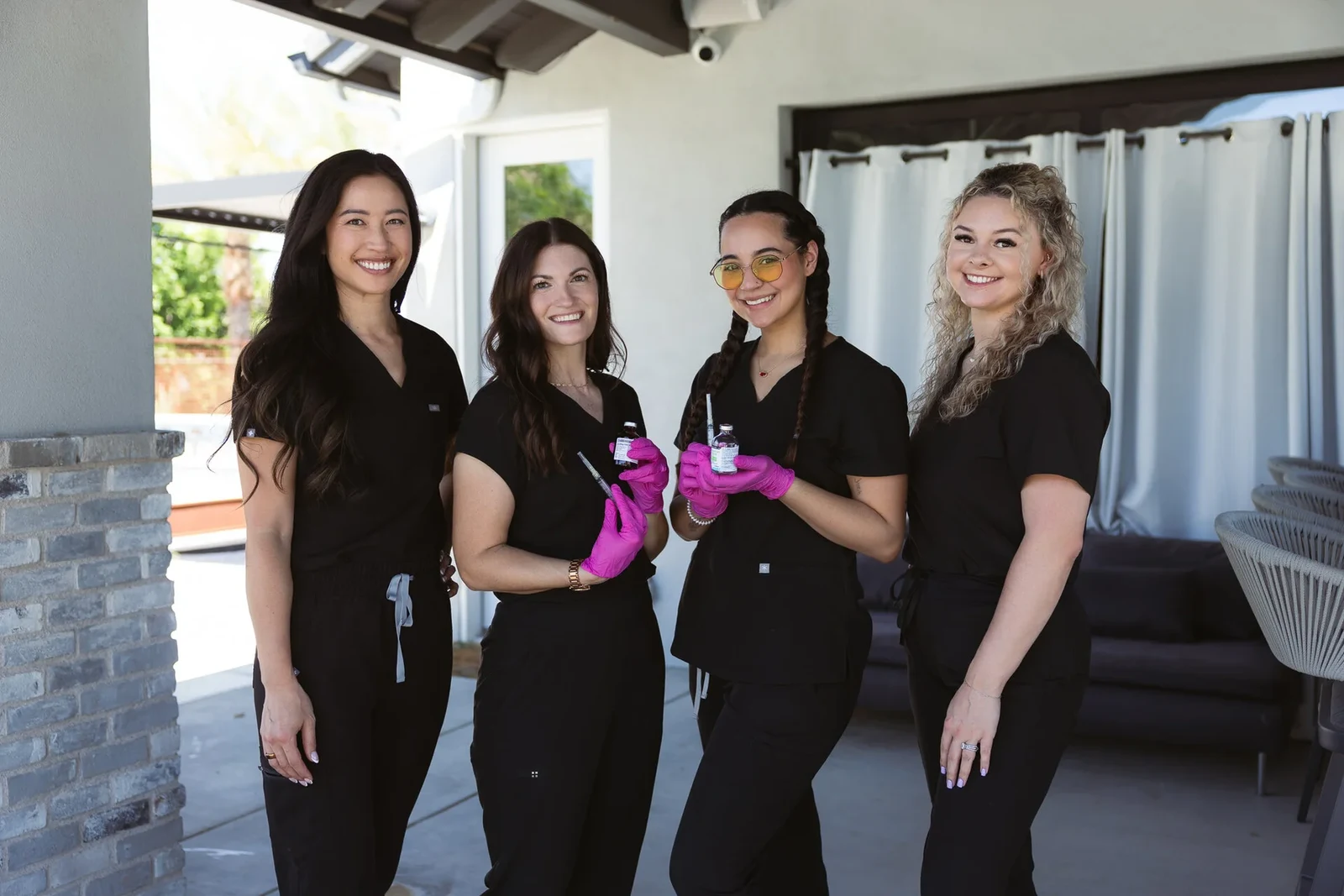
The four IV Revival registered nurses in black scrubs on a shaded Phoenix patio, two of them holding vials

Who Is Treating You

  • Registered Nurses Only

    Every treatment is placed by an experienced Registered Nurse. Never an EMT, a paramedic or a technician.

  • Board-Certified Medical Director

    Dr. Drew Davenport, a board-certified anesthesiologist with two decades of experience, develops and oversees every protocol.

  • Founded by Nurse Anesthetists

    IV Revival was started in 2016 by two Nurse Anesthetists who wanted careful, experienced line placement delivered somewhere more comfortable.

  • Operating Since 2016

    Nearly a decade of mobile IV therapy experience across the Phoenix metro.

Frequently Asked Questions

How fast does IV therapy work for post-exertion recovery?

Many people notice a meaningful shift during the drip, though results vary. Fluids restore plasma volume, then electrolytes and B vitamins get to the tissues that need them. Full recovery from a hard day still takes rest and food, but the drip helps address the fluid and mineral bottleneck that slows everything else down.

How long does the treatment last?

Your nurse places the line, stays with you for the entire drip, monitors you throughout and packs up afterwards. Most clients continue to notice benefits over the following day as tissues rehydrate and cofactor levels normalize.

Can I get IV therapy if I am very nauseous?

Yes. In fact, that is when IV therapy is most useful. Because the fluids and nutrients bypass your stomach entirely, they do not depend on gut absorption. If nausea is significant, ask about the anti-nausea add-on and your nurse will discuss it with you.

Is it safe?

IV therapy is well established when delivered by trained clinicians. At IV Revival, every treatment is placed by an experienced Registered Nurse working under protocols developed and overseen by our board-certified anesthesiologist medical director, Dr. Drew Davenport. Your nurse reviews your history, monitors you during the drip and stays with you the entire session.

Do you accept insurance?

IV therapy is generally considered elective and is not billed through insurance. We accept cash, all major credit and debit cards, and HSA cards.

Is IV therapy right for me, and when should I see a doctor instead?

Every IV Revival treatment is placed by an experienced Registered Nurse and follows protocols developed and overseen by our board-certified anesthesiologist medical director, Dr. Drew Davenport. We do not use EMTs, paramedics or technicians. Treatments are mixed on site from company-supplied stock, so your nurse can adjust to how you actually feel when they arrive. If your symptoms include confusion, fainting, chest pain, no urine output for 8 or more hours, a core temperature above 103F, or muscle pain with dark cola-colored urine, seek emergency care rather than booking an IV. Every line is placed by an experienced RN. Never an EMT, paramedic or technician. This has been the rule since 2016. Drip protocols are developed and overseen by Dr. Drew Davenport, a board-certified anesthesiologist with two decades of experience. Your nurse mixes your treatment at your location from company-supplied stock rather than delivering a pre-packed bag. Confusion, fainting, chest pain, no urine for 8 or more hours, a temperature above 103F, or dark cola-colored urine are emergencies. Call 911 or go to the ER.

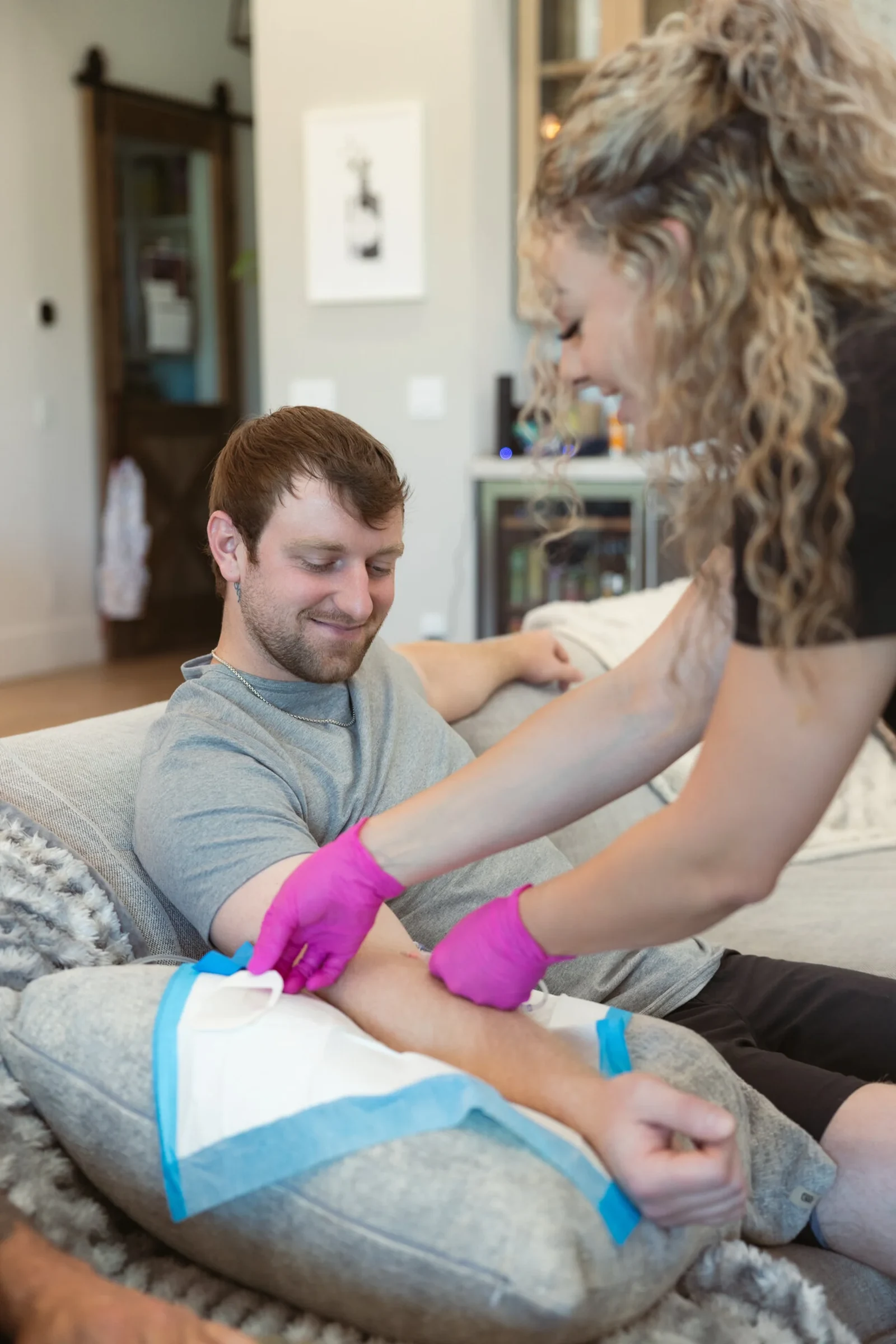
A registered nurse going through the health history with a client seated on her own sofa, the IV stand ready beside them

Recovery to your door

Reset After Your Big Day Outside

A registered nurse can be at your home or hotel across the Phoenix metro, 9 AM to 9 PM, seven days a week.

CallBook now